
Nauru fuel terminal - case study
- May 25
- 2 min read
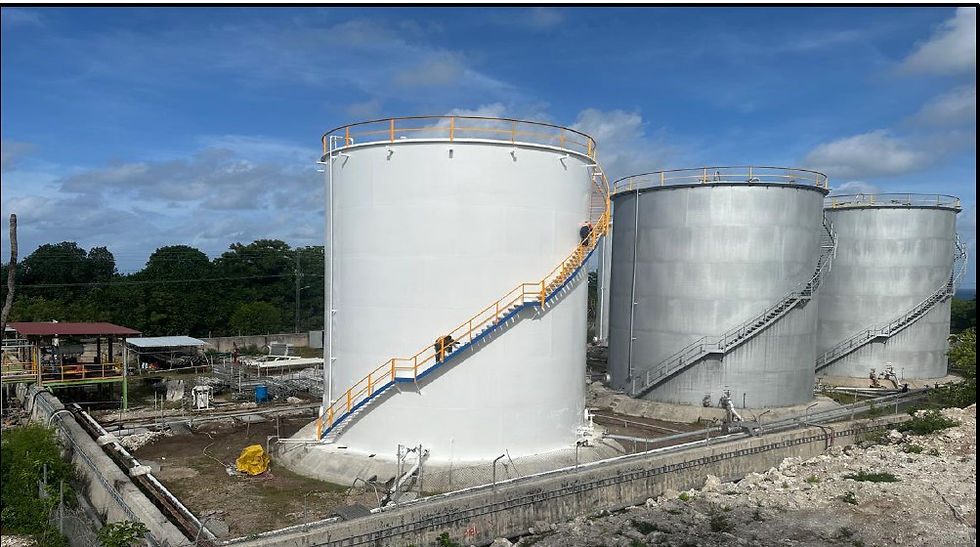
In one of the world’s smallest and most isolated nations, Nauru, reliable infrastructure is critical to everyday life.
For us, the opportunity to support fuel infrastructure upgrades on the island has become about more than tanks and pipelines. It’s about increasing resilience, reliability, and helping safeguard the wellbeing of an entire country.
Once one of the wealthiest nations per capita due to phosphate mining, Nauru now faces significant infrastructure and environmental challenges. Around 80% of the island has been left uninhabitable following more than a century of mining activity, while essential services remain heavily dependent on imported fuel.
Our Construction Manager, Mike Williams, says with just over 10,000 residents living around the island’s narrow coastline, any disruption to fuel supply has serious implications.
“If they lose diesel, it shuts the whole place down. That’s the hospital, the air conditioning, the power generation, everything runs on it.”
Our company was engaged by the Government of Nauru and Vital energy to assess and improve the resilience of its fuel terminal and storage infrastructure. The P&P team have been involved there since 2021 identifying vulnerabilities and developing long-term solutions to reduce operational risk.
The work has included:
Assessing ageing fuel storage tanks and pipelines
Developing staged de-risking and upgrading inspection programmes
Designing new fuel pipeline infrastructure
Increasing fuel storage flexibility and redundancy
Supporting future water storage and fire protection
A key part of Mike’s purpose has been to create systems that can realistically operate in and endure the realities of island life.
“Everything is designed with simplicity and resilience in mind,” he says. “You can’t design for a highly automated system when there isn't resource on the island to maintain it. We design things to last, to be practical, and to keep operating.”
We’ve worked closely with local operators and contractors to help establish clearer maintenance procedures, improve operational understanding, and build long-term capability within the facility.
The work also highlights the importance of quality infrastructure investment in Pacific nations, where limited regulation and historic underinvestment can create long-term risks.
Working to New Zealand/Australian standards means the infrastructure can be operated and inspected to those standards.This ensures operability to globally recognised standards and regulations. Building resilience and a maintainable system.
A major part of our work in Nauru is now focused on replacing deteriorated kilometre-long fuel pipelines connecting the wharf to the terminal. One of the two existing pipelines had degraded to the point it could no longer safely hold product, creating a significant operational risk now relying on a singular line, with no redundancy.
Despite the logistical challenges of working in remote island environments, from shipping delays to limited local resources, Mike is finding the project extremely rewarding.
“The harder the work, the bigger the reward.
“Our team will be able to look back and know we played a part in improving the resilience of a country’s infrastructure, which is pretty rewarding.”